Trademark registration is one of the most important steps for protecting your brand identity. But every business owner knows that the real challenge often begins after filing — when the Trademark Registry issues the Examination Report.
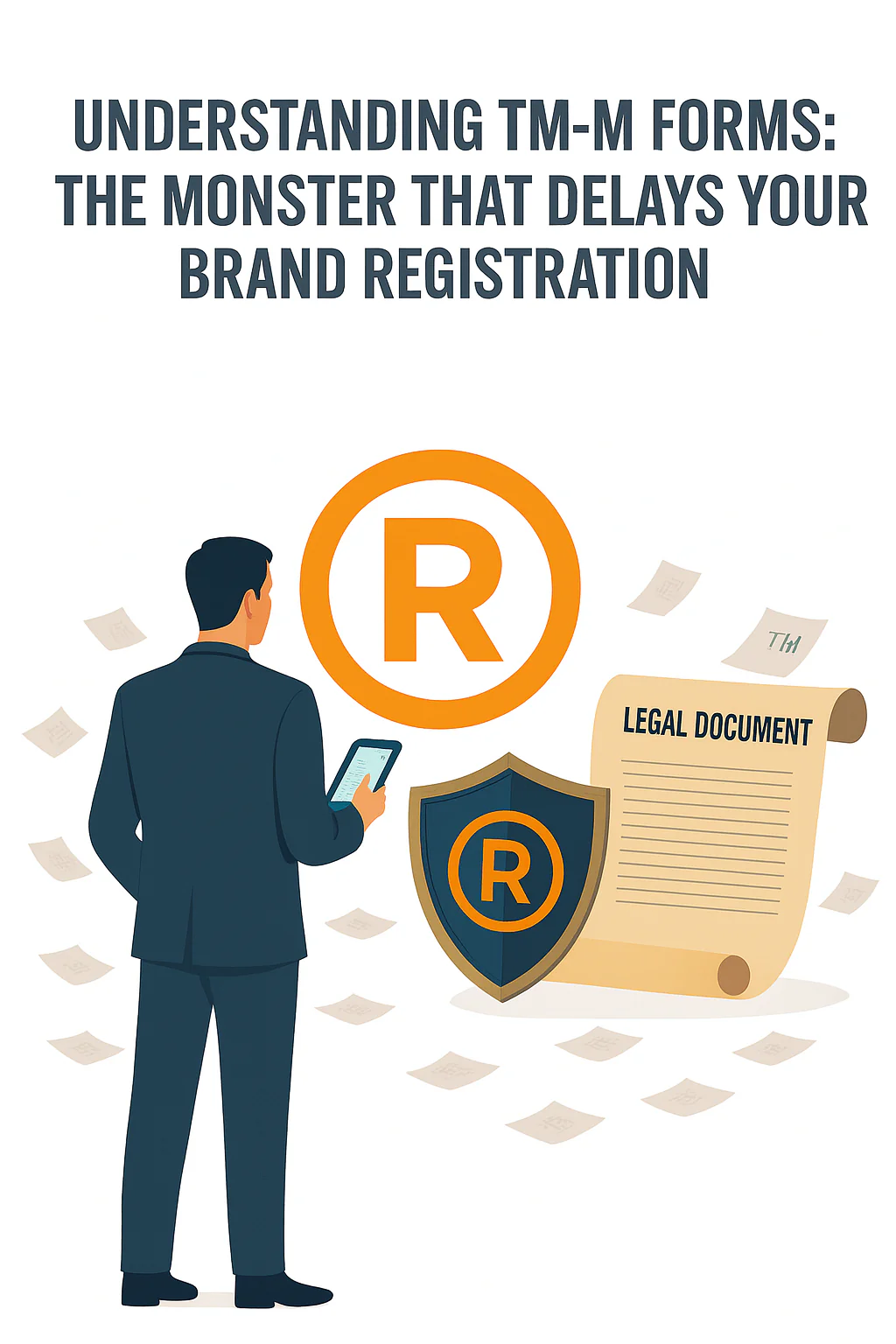
Inside this report, you may come across various TM-M forms, each pointing to specific issues that must be corrected or clarified. For many startups and entrepreneurs, these forms feel like a monster blocking their registration.
In this blog, we’ll simplify the TM-M complexities and explain the common reasons behind these objections.
1. Specification of Goods / Services
One of the most frequent issues raised is improper classification of goods or services.
If your description is too broad, unclear, or placed in the wrong class, the examiner will issue a TM-M requirement.
How to avoid it:
Use the official class list and describe your goods/services precisely.
2. Translation / Transliteration Issues
If your brand name is in a regional or foreign language, the Registry may require:
- English translation
- Transliteration (English pronunciation)
Without these, your application cannot move forward.
3. Requirements of User Affidavit
If you claim that your trademark is already in use, you must provide a User Affidavit with evidence.
Common missing elements:
- Incorrect dates of use
- No supporting proof
- Wrong format
A TM-M notice will ask you to submit a proper affidavit.
4. Logo / Design-Related Issues
Graphic trademarks, stylized logos, and device marks may face objections regarding:
- Unclear design
- Improper representation
- Missing color claim (if required)
Submitting a corrected image or details through a TM-M form is mandatory.
5. Prior Use Evidence
The Registry sometimes asks for:
- Bills
- Invoices
- Social media pages
- Packaging
- Advertisements
These are used to verify your claimed date of usage.
If the evidence is not strong, a TM-M objection will be issued.
6. Formalities Check Failures
This includes small but important technical mistakes such as:
- Missing details
- Wrong applicant name
- Incomplete form fields
- Missing signatures
These minor issues can cause significant delays unless corrected quickly.
7. Translation of Vernacular / Foreign Text
If your mark contains any non-English words or characters, the Registry may ask for:
- English translation
- Explanation of meaning
This ensures the mark is not misleading or offensive.
8. Use of Prohibited / Restricted Words
Some words are not allowed without special permissions, such as:
- Government
- National
- Bank
- Trust
- International
If your brand contains such terms, you must justify or remove them.
Why This Feels Like a Monster
Receiving a long list of TM-M requirements can be overwhelming.
But remember:
✔ These objections are normal
✔ They help ensure your trademark is legally strong
✔ A correct response increases your approval chances
With proper guidance, the monster becomes manageable.